Price:
$39.00
Status:
Available
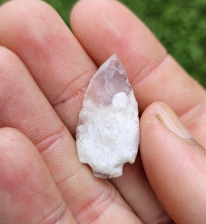
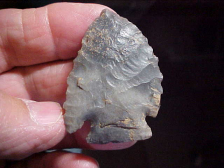
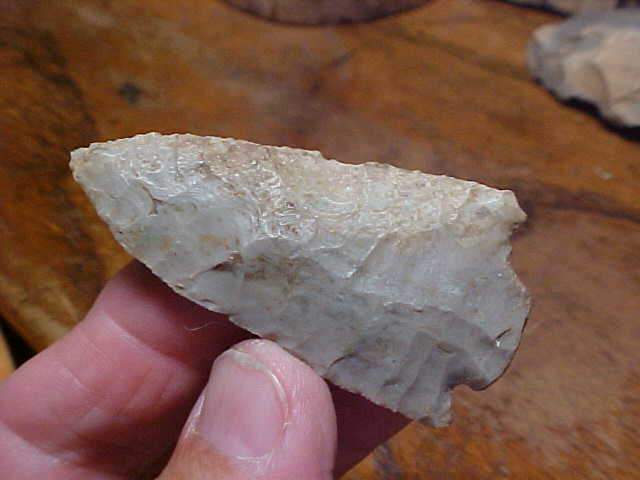
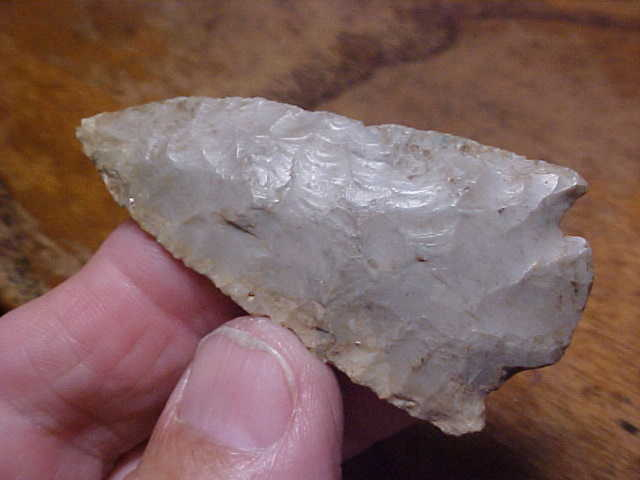
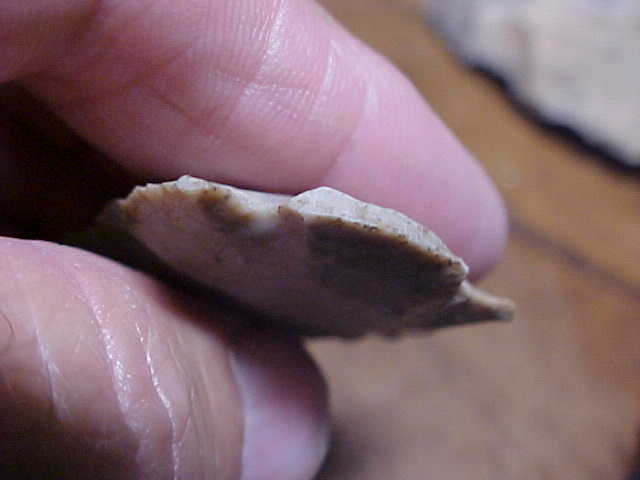
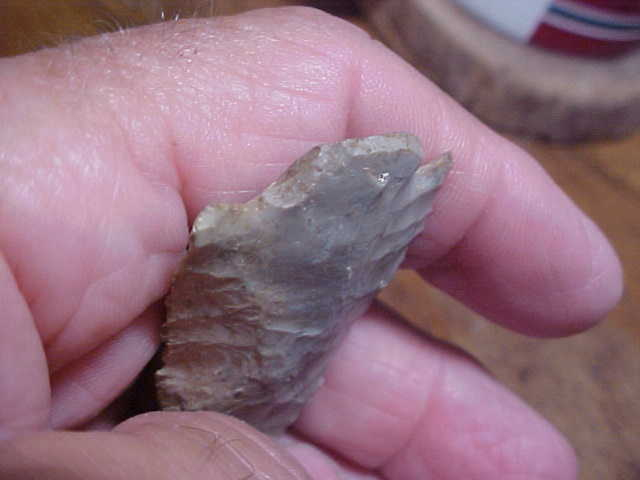
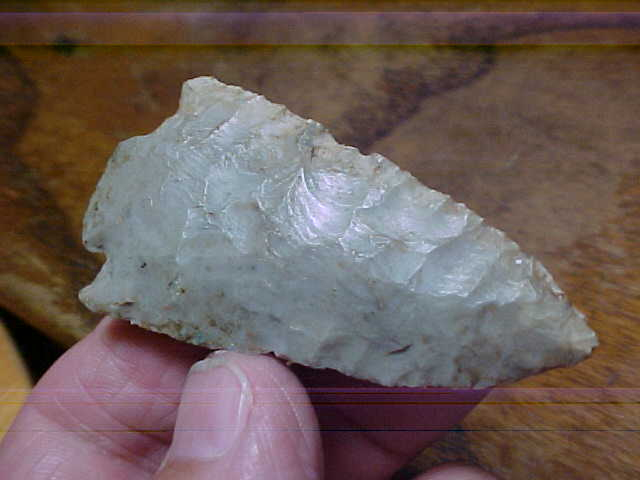
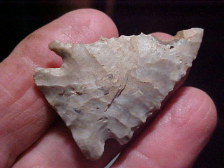
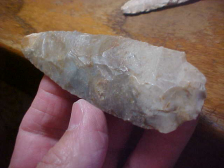
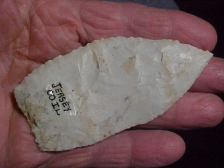
Almost two months this fractured base point has been on my computer stand, a back-and-forth debate: is it a Pinetree with a fractured base...or is it a Decatur Fractured Base where "things didn't go right" for the Early archaic Culture knapper. That last an "oops" by a Decatur Cculture flintworker is where I've landed; several factors went into that discussion (with myself, lol)---number one (of those) is that the basal edge is TOO close to the top of the notches. Decaturs, as you know from seeing examples in Overstreet, the notches are shallow; on a Pinetree the notches would be deeper. Too, Pinetrees might have a snap base from being used, but they didn't employ the technique on their hafted knives and projectiles. Decaturs did. On this Green County, Indiana, point, Indiana Holland Flint, 2&3/8" by 1&1/4", the basal 'fracturing' goes from one basal corner over to a missing basal corner--old fracture, filled with mineralization. A close up pic should show the length of that edge flake removed--slightly unusual in how they did if as Decatur ( Fractured Base types) flint chipping almost ALWAYS has TWO flakes removed; one from each basal corner--they meet right about in the base-center, a spot where you can catch a fingernail at the flake 'junction'---if it's a Decatur and you can't catch a nail, it ain't made right, that's what I was taught forty years back. So, hopefully that explains why classifying this piece took so long--sometimes the "Early Archaic-type" flaking on Pinetree blades and Decatur blades show similarities, but their bases, those are distinctive. One note--check out the basal thinning on each face--one side is practically a flute it's so heavy of a 'thinning strike'; that goes to the skill of the ancient knapper. Shipping is $9.00 (USPS rates), and you have two ways to buy the point: you can send me a check--or a money order as I do not use paypal-type services--Roy A.
Disclaimer: Seller assumes all responsibility for this listing